Students’ Perspectives on the Use of Chat-GPT in the Fields of Phonology, Morphology, and Syntactics in Arabic Language Learning
DOI:
https://doi.org/10.67046/jietd.v1i1.1Keywords:
Arabic Language Education, ChatGPT, Morphology, Phonology, SyntaxAbstract
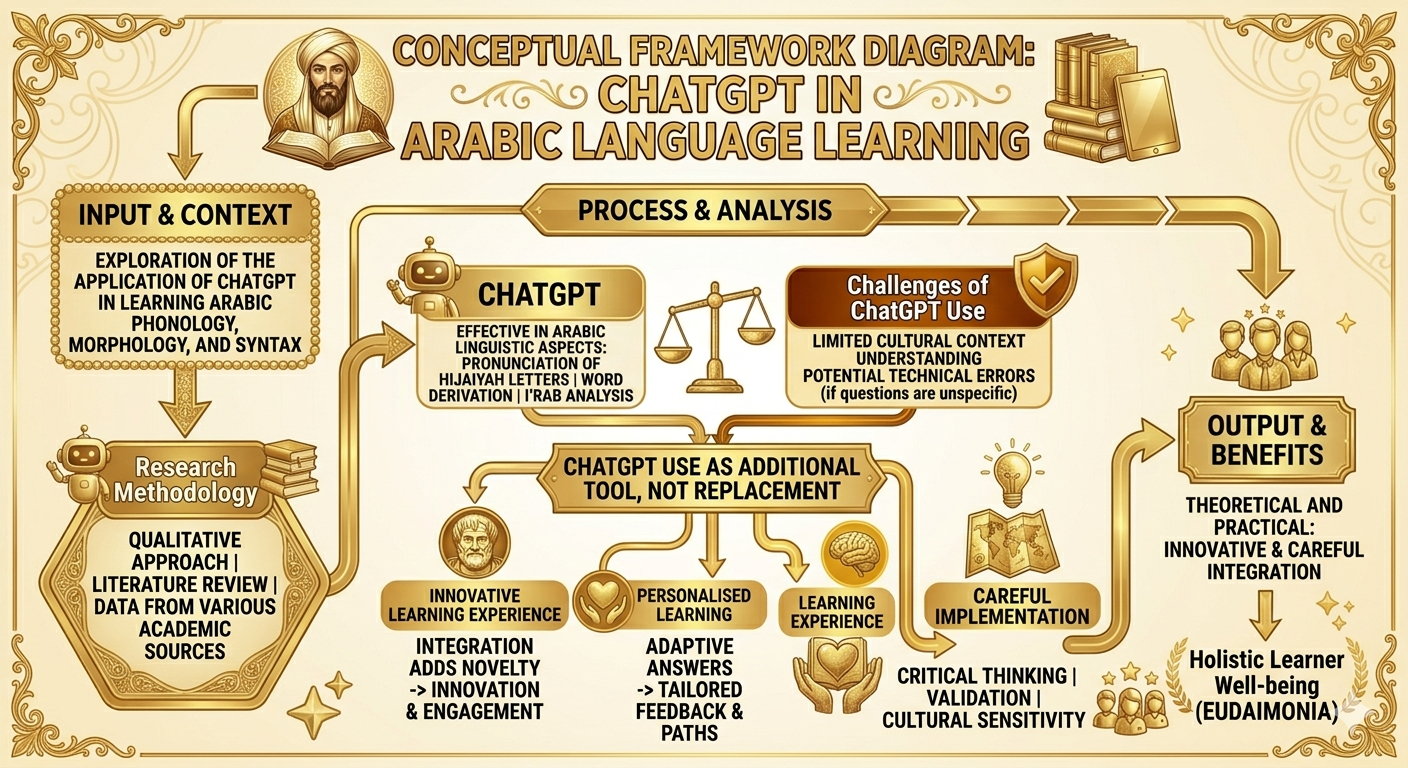
This study aims to explore the use of ChatGPT in learning Arabic phonology, morphology, and syntax from the perspective of students of the Arabic Language Education (PBA) Study Programme. Using a qualitative approach with a literature review method, this research analyses data from various academic sources. The results show that ChatGPT is effective in helping students understand linguistic aspects of Arabic, such as pronunciation of hijaiyah letters, word derivation, and i'rab analysis. The technology improves learning efficiency by providing instant, interactive and adaptive answers to students' needs, saving time and money. However, challenges such as limited understanding of cultural context and potential technical errors if questions are not specific remain. Therefore, ChatGPT should be used as an additional tool, not a replacement for traditional methods. This research shows that ChatGPT integration can create a more innovative and personalised learning experience, but it must be implemented carefully
References
Aathifah Al Farros , & Masrun . (2024). Metode Shamitah (The Silent Way Method) dalam Pembelajaran Bahasa Arab . INTIFA: Journal of Education and Language, 1(1), 96–104. https://doi.org/10.62083/7jg41m70
Abdaljaleel, M. , Barakat, M. , Alsanafi, M. , Salim, N. A. , Abazid, H. , Malaeb, D. , Mohammed, A. H. , Hassan, B. A. R. , Wayyes, A. M. , Farhan, S. S. , El Khatib, S. , Rahal, M. , Sahban, A. , Abdelaziz, D. H. , Mansour, N. O. , AlZayer, R. , Khalil, R. , Fekih-Romdhane, F. , Hallit, R. , … Sallam, M. (2023). Factors influencing attitudes of university students towards ChatGPT and its usage: A multi-national study validating the TAME-ChatGPT survey instrument. https://doi.org/10.20944/preprints202309.1541.v1
Aisyah, S. , Sholeh, M. , Lestari, I. B. , Yanti, L. D. , Nuraini, N. , Mayangsari, P. , & Mukti, R. A. (2024). Peran penggunaan teknologi dalam pembelajaran IPS di era digital. Jurnal Inovasi, Evaluasi Dan Pengembangan Pembelajaran (JIEPP) , 4(1), 44–52. https://doi.org/10.54371/jiepp.v4i1.382
Akbar Islamy, M. F. , Sutiah, S. , & R. Taufiqurrochman, R. T. (2024). Strategi mengatasi problematikan teknologi dalam pembelajaran bahasa Arab di abad 21. COMSERVA: Jurnal Penelitian Dan Pengabdian Masyarakat , 4(3), 723–730. https://doi.org/10.59141/comserva.v4i3.1365
Al-Mughairi, H. , & Bhaskar, P. (2024). Exploring the factors affecting the adoption AI techniques in higher education: Insights from teachers’ perspectives on ChatGPT. Journal of Research in Innovative Teaching & Learning . https://doi.org/10.1108/JRIT-09-2023-0129
Anwar, M. R. , & Ahyarudin, H. A. (2023). AI-powered Arabic language education in the era of Society 5.0. IAIC Transactions on Sustainable Digital Innovation (ITSDI) , 5(1), 50–57. https://doi.org/10.34306/itsdi.v5i1.607
Ardhianti, M. , Prawoto, E. C. , & Indayani, I. (2024). Implementasi e-modul berbasis Android untuk meningkatkan kemampuan berbahasa Indonesia pada mahasiswa Poltekes Kemenkes dan UNIPA Surabaya. ALFABETA: Jurnal Bahasa, Sastra, Dan Pembelajarannya , 7(1), 219–266. https://doi.org/10.33503/alfabeta.v7i1.4119
Bazelais, P. , Lemay, D. J. , & Doleck, T. (2024). User acceptance and adoption dynamics of ChatGPT in educational settings. Eurasia Journal of Mathematics, Science and Technology Education , 20(2), em2393. https://doi.org/10.29333/ejmste/14151
Duong, C. D. (2024). Modeling the determinants of HEI students’ continuance intention to use ChatGPT for learning: A stimulus–organism–response approach. Journal of Research in Innovative Teaching & Learning , 17(2), 391–407. https://doi.org/10.1108/JRIT-01-2024-0006
Fadli, M. R. (2021). Memahami desain metode penelitian kualitatif. HUMANIKA , 21(1), 33–54. https://doi.org/10.21831/hum.v21i1.38075
Fadly, A. (2022). Interferensi fonologis bahasa Somali ke dalam bahasa Indonesia dan implikasinya bagi pemelajaran BIPA. Pena Literasi , 5(1), 1. https://doi.org/10.24853/pl.5.1.1-8
Faiz, M. , & Afrita, J. (2024). Tantangan dan strategi pemahaman bahasa Arab untuk pendidikan generasi Z: Analisis dan prospek masa depan. Jurnal Pendidikan Indonesia , 5(4), 156–164. https://doi.org/10.59141/japendi.v5i4.2749
Fitriani. (2023). Fungsi, kategori, dan peran sintaksis bahasa Arab: Perspektif linguistik modern. International Journal Conference , 1(1), 180–212. https://doi.org/10.46870/iceil.v1i1.473
Fitriani, A. K. , & Setiyowati, E. (2024). Analisis emosi tokoh utama dalam novel 7 Prajurit Bapak karya Wulan Nuramalia (kajian psikologi sastra). ALFABETA: Jurnal Bahasa, Sastra, Dan Pembelajarannya , 7(1), 227–255. https://doi.org/10.33503/alfabeta.v7i1.3973
Hadiyanto, A. , Ulfah, S. M. , & Samitri, C. (2022). Peningkatan kualitas pembelajaran bahasa Arab menggunakan buku al-lisan al-Umm . Satwika: Jurnal Pengabdian Kepada Masyarakat , 2(1), 01–05. https://doi.org/10.21009/satwika.020101
Kardika, R. W. , Rokhman, F. , & Pristiwati, R. (2023). Penggunaan media digital terhadap kemampuan literasi multimodal dalam pembelajaran bahasa Indonesia. JIIP - Jurnal Ilmiah Ilmu Pendidikan , 6(9), 6715–6721. https://doi.org/10.54371/jiip.v6i9.2307
Le, Q. T. (2023). Teaching and learning morphology in the English language curriculum: An exploration into belief and reality in Vietnam. International Journal of TESOL & Education , 3(2), 43–59. https://doi.org/10.54855/ijte.23324
Liu, M. (2023). Exploring the application of artificial intelligence in foreign language teaching: Challenges and future development. SHS Web of Conferences , 168, 03025. https://doi.org/10.1051/shsconf/202316803025
Mananay, J. A. (2024). Integrating artificial intelligence (AI) in language teaching: Effectiveness, challenges, and strategies. International Journal of Learning, Teaching and Educational Research , 23(9), 361–382. https://doi.org/10.26803/ijlter.23.9.19
Maulana, I. , Alim, A. , & Supraha, W. (2024). Mengidentifikasi kebutuhan pembelajaran bahasa Arab santri pondok pesantren. JIIP - Jurnal Ilmiah Ilmu Pendidikan , 7(4), 3654–3659. https://doi.org/10.54371/jiip.v7i4.4020
Muhammad Abi Farhan , Nunung Nursyamsiah , Rinaldi Supriadi , & Mia Nurmala . (2024). Penerapan metode OK4R pada teks eksplanasi bahasa Arab untuk meningkatkan maharatul qiroah di Pesantren Sabilunnajah. JPG: Jurnal Pendidikan Guru , 5(2), 258–268. https://doi.org/10.32832/jpg.v5i2.16374
Mustofa, M. A. (2018). Interferensi bahasa Indonesia terhadap bahasa Arab. An Nabighoh: Jurnal Pendidikan Dan Pembelajaran Bahasa Arab , 20(02), 139. https://doi.org/10.32332/an-nabighoh.v20i02.1275
Pack, A. , & Maloney, J. (2024). Using artificial intelligence in TESOL: Some ethical and pedagogical considerations. TESOL Quarterly , 58(2), 1007–1018. https://doi.org/10.1002/tesq.3320
Perwira, A. , Faridah, E. S. , Apriliani, P. , & Mubarok, A. M. (2023). Telaah kurikulum bahasa Arab di MA Al-Hidayah Depok. JURNAL KAJIAN ISLAM MODERN , 10(01), 28–33. https://doi.org/10.56406/jkim.v10i01.320
Ritonga, A. M. , Suib, M. , & Zaky, A. (2023). Tantangan dan hambatan: Analisis problematika pembelajaran bahasa Arab era Society 5.0 di perguruan tinggi agama Islam di Indonesia. Syntax Literate; Jurnal Ilmiah Indonesia , 8(5), 3272–3280. https://doi.org/10.36418/syntax-literate.v8i5.11540
Sallam, M. , & Mousa, D. (2024). Evaluating ChatGPT performance in Arabic dialects: A comparative study showing defects in responding to Jordanian and Tunisian general health prompts. Mesopotamian Journal of Artificial Intelligence in Healthcare , 2024, 1–7. https://doi.org/10.58496/MJAIH/2024/001
Sallam, M. , Salim, N. A. , Barakat, M. , Al-Mahzoum, K. , Al-Tammemi, A. B. , Malaeb, D. , Hallit, R. , & Hallit, S. (2023). Assessing health students’ attitudes and usage of ChatGPT in Jordan: Validation study. JMIR Medical Education , 9, e48254. https://doi.org/10.2196/48254
Sari, F. M. , Astuti, A. , Zamanda, D. , Restu, F. P. , & Fadilla, A. (2024). Kebijakan fiskal dan dampaknya terhadap perekonomian Indonesia. Journal of Economics, Assets, and Evaluation , 1(4), 1–10. https://doi.org/10.47134/jeae.v1i4.231
Shahzad, M. F. , Xu, S. , & Asif, M. (2025). Factors affecting generative artificial intelligence, such as ChatGPT, use in higher education: An application of technology acceptance model. British Educational Research Journal , 51(2), 489–513. https://doi.org/10.1002/berj.4084
Sugiono, S. (2024). Peran business intelligence dalam menciptakan akuntabilitas pada organisasi pemerintah: Sebuah tinjauan konseptual. Jurnal Administrasi Publik , 15(1). https://doi.org/10.31506/jap.v15i1.24512
Tlili, A. , Shehata, B. , Adarkwah, M. A. , Bozkurt, A. , Hickey, D. T. , Huang, R. , & Agyemang, B. (2023). What if the devil is my guardian angel: ChatGPT as a case study of using chatbots in education. Smart Learning Environments , 10(1), 15. https://doi.org/10.1186/s40561-023-00237-x
Xiao, Y. , & Zhi, Y. (2023). An exploratory study of EFL learners’ use of ChatGPT for language learning tasks: Experience and perceptions. Languages , 8(3), 212. https://doi.org/10.3390/languages8030212
Downloads
Published
How to Cite
Issue
Section
License
Copyright (c) 2025 The Author (S).

This work is licensed under a Creative Commons Attribution-ShareAlike 4.0 International License.
Copyright Notice
Authors who publish in the Journal of Islamic Education Thought and Development agree to the following terms:
- Copyright Ownership
Authors retain the copyright of their published work and grant the Journal of Islamic Education Thought and Development the right of first publication. - Creative Commons License
The published work is simultaneously licensed under the Creative Commons Attribution 4.0 International License (CC BY 4.0), which permits others to copy, distribute, adapt, and build upon the work, provided appropriate credit is given to the original author(s) and the journal as the initial publisher. - Additional Distribution Rights
Authors may enter into separate, additional contractual arrangements for the non-exclusive distribution of the published version of the work, such as depositing it in an institutional repository, publishing it in a book, or sharing it through other academic platforms, provided that acknowledgment is made of its initial publication in the Journal of Islamic Education Thought and Development. - Self-Archiving Policy
Authors are permitted and encouraged to post their manuscripts online, including in institutional repositories, personal websites, or academic networking platforms, both before and during the submission process. - Benefits of Early Dissemination
Early online dissemination of research may facilitate scholarly exchange, increase visibility, and contribute to earlier and broader citation of published articles.