A Hermeneutic Study of the Ethical Use of Technology in Arabic Language Education: A Perspective of Qur'anic Verses
DOI:
https://doi.org/10.67046/jietd.v1i1.2Keywords:
Al-qur'an; arabic; hermeneutics; technologyAbstract
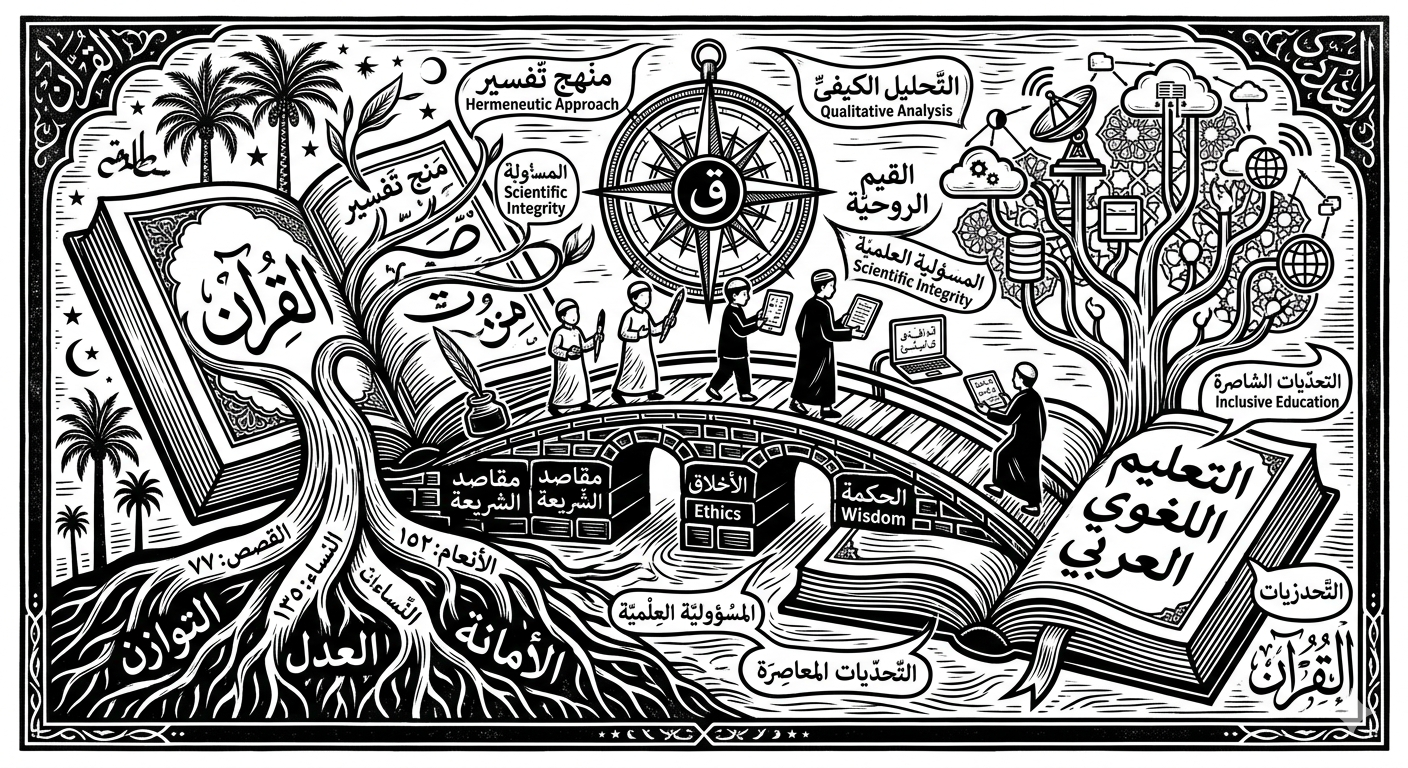
This research project takes a Qur'anic hermeneutic approach to examine the ethical use of technology in Arabic language education. The study aims to formulate ethical guidelines aligned with sharia objectives by analysing relevant Qur'anic verses. A qualitative literature review is employed, combining Qur'anic text analysis, contextual interpretation and supporting studies on hermeneutics and technology ethics. The findings reveal that values such as honesty (Al-An'am: 152), justice (An-Nisa': 135) and balance (Al-Qasas: 77) form the basis of the ethical use of technology. Hermeneutics enables the dynamic interpretation of sacred texts in order to address contemporary challenges, such as the instant nature of modern culture or the access gaps relating to technology. The research also emphasises that technology should be used to strengthen spiritual values rather than merely as a technical tool. Referring to the maqashid of sharia, the resulting ethical guidelines aim to educate the ummah (Fatir 28) and strengthen understanding of the Qur'an through Arabic. The study's contribution is that Arabic education in the digital era can be inclusive, equitable and grounded in scientific integrity.
References
Susanto, E. (2016). Hermeneutic Studies Introduction. Kencana.
Simon, A. S. (2023). Prospects for Arabic Language Learning in the Era of Generative Artificial Intelligence. Assuthur: Journal of Arabic Language Education, 2(2), 133-140.
Subhan, A. (2023). Ethical Use of Technology in Learning. Al Qalam: Scientific Journal of Religion and Society, 17(5), 3723-3730.
Burhanuddin, B. (2024). Development of communication-based teaching materials in Arabic language education. Indonesian Journal of Education, 4(12), 1318-1328. https://doi.org/10.59141/japendi.v4i12.2583
Faiz, M. and Afrita, J. (2024). Arabic comprehension challenges and strategies for generation z education: analysis and future prospects. Journal of Indonesian Education, 5(4), 156-164. https://doi.org/10.59141/japendi.v5i4.2749
Khitom, K. and Taufik, T. (2023). Arabic language learning curriculum in state Islamic universities (ptkin). Tadris Al-Arabiyat Journal of Arabic Language Education Studies, 3(1), 28-44. https://doi.org/10.30739/arabiyat.v3i1.1766
Nasution, N. and Lubis, L. (2023). The urgency of Arabic language learning in Islamic education. Simki Pedagogia Journal, 6(1), 181-191. https://doi.org/10.29407/jsp.v6i1.227
Rumodar, G., Messakh, J., & Naibaho, L. (2024). Language education as an effort to build a superior generation in the digital era. Journal of Kridatama Science and Technology, 6(01), 80-87. https://doi.org/10.53863/kst.v6i01.1077
Clarence, S., Azzah, U., Gantina, R., & Sitorus, M. (2023). Tarumanagara University students' understanding of plagiarism. JSSTK, 1(1), 217-226. https://doi.org/10.24912/jsstk.v1i1.27157
Hertati, L. (2023). Exploring individual morality of college students, a role of addressing the ethics of accounting student fraud in education. Relevance, 7(2), 132-142. https://doi.org/10.61401/relevansi.v7i2.106
Huda, N. and Afrita, J. (2023). The importance of Arabic in diplomacy and international relations education. Indonesian Journal of Education, 4(11), 1242-1252. https://doi.org/10.59141/japendi.v4i11.2335
Meliyani, A., Mentari, D., Syabani, G., & Zuhri, N. (2022). Analysis of digital learning media needs for teachers to create effective learning activities and active students. Journal of Jendela Pendidikan, 2(02), 264-274. https://doi.org/10.57008/jjp.v2i02.179
Nimasari, E. (2017). Students' perceptions of plagiarism. Premiere Educandum Journal of Basic Education and Learning, 7(02), 115. https://doi.org/10.25273/pe.v7i2.1623
Novita, A. and Munawir, M. (2022). Arabic language learning media based on communication information technology in online learning in elementary schools. Educative Journal of Education Science, 4(1), 1378-1386. https://doi.org/10.31004/edukatif.v4i1.1947
Syarif, M. (2023). Protecting academic integrity by developing a violation complaint information system among universities. Restikom Journal of Informatics and Computer Engineering Research, 5(2), 137-147. https://doi.org/10.52005/restikom.v5i2.148
Abdullah, M., Yaakob, M., Zulkifli, M., & Sahrir, M. (2023). A review of studies related to Arabic language learning based on the common european framework of reference for language (cefr). Ijaz Arabi Journal of Arabic Learning, 6(2). https://doi.org/10.18860/ijazarabi.v6i2.20386
Al-Khatib, M. (2023). The concept of justice in Islam: a socio-pragmatic analysis. Journal of Ethnic and Cultural Studies, 45-66. https://doi.org/10.29333/ejecs/1749
Cox, C. and Charles, T. (2024). A contrastive analysis of emirati and modern standard arabic. International Journal of Religion, 5(11), 661-667. https://doi.org/10.61707/wzqgvs56
Gazali, E. and Saefuloh, H. (2023). Development of an Arabic receptive proficiency test instrument based on the common european framework of reference for languages. Al-Ta Rib Scientific Journal of Arabic Language Education Study Program Iain Palangka Raya, 11(2), 293-308. https://doi.org/10.23971/altarib.v11i2.6721
Harnika, L., Abidin, Z., Maulana, M., Saputri, S., Salsabila, A., & Azim, A. (2024). Impact of linguistic environment on speaking skills of female students at the arabic language center islamic boarding school in indonesia. jallt, 2(2), 121-136. https://doi.org/10.23971/jallt.v2i2.180
Hastang, H. and Ahmad, R. (2023). Analysis of arabic language learning difficulties among students in the qawaid al-lughah al-arabiyyah materials. Didaktika Journal of Education, 17(1), 31-42. https://doi.org/10.30863/didaktika.v17i1.5052
Ismail, M., Ahmad, F., & Ma'ruf, M. (2023). The impact of learning management system "arabi.id" web-based application on developing Arabic language skills. Al-Ta Rib Scientific Journal of Arabic Language Education Study Program Iain Palangka Raya, 11(2), 213-232. https://doi.org/10.23971/altarib.v11i2.6591
Maba, A., Akla, A., & Aminnuddin, N. (2022). Impact of demographical factors and language acquisition level on depression symptoms among arabic language learners. Couns-Edu| the International Journal of Counseling and Education, 7(3). https://doi.org/10.23916/0020220740330
Thoriq, M., Kusumadewi, N., & Ahsanuddin, M. (2023). The development of innovative arabic matriculation learning media based on google sites to improve the arabic proficiency of man 1 pasuruan students. Journal of Al-Azhar Indonesia Humanities Series, 8(2), 154. https://doi.org/10.36722/sh.v8i2.1898
Yusuf, M., Rahmawati, S., & Zulaeha, Z. (2023). The language environment in supporting Arabic language learning in pesantren south sulawesi. Bulletin of Science Education, 3(2), 84. https://doi.org/10.51278/bse.v3i2.561
(2021). Bridging digital divides in g20 countries.. https://doi.org/10.1787/35c1d850-en
Dhondt, S., Oeij, P., & Pot, F. (2021). Digital transformation of work: spillover effects of workplace innovation on social innovation.. https://doi.org/10.4337/9781789909357.00013
Healy, G., Courtney, M., Paddle, H., & Riddell, L. (2024). Curriculum in professional practice: innovations in higher education. The Curriculum Journal, 36(1), 200-201. https://doi.org/10.1002/curj.315
Hilowle, I. (2024). The impact of technology on economic development in somalia. MJHIU, 2(1), 152-170. https://doi.org/10.59336/tp5y6803
Pinto, H., Nogueira, C., & Vieira, G. (2023). Digitalization landscape in the european union: statistical insights for a digital transformation. European Public & Social Innovation Review, 8(1), 20-38. https://doi.org/10.31637/epsir.23-1.2
Zimm, C. (2019). Methodological issues in measuring international inequality in technology ownership and infrastructure service use. Development Studies Research, 6(1), 92-105. https://doi.org/10.1080/21665095.2019.1605533
(2022). A radical shift in education practice and the question of ethical reflection in the pandemic era. Canadian Journal of Educational and Social Studies. https://doi.org/10.53103/cjess.v2i3.44
Astra, N., Hendrawati, T., & Andriyana, D. (2024). Leadership in Islamic education: integrating ethical values in the digital age. ijsh, 1(2), 136-143. https://doi.org/10.59613/ecwa6z62
Guan, X., Feng, X., & Islam, A. (2023). The dilemma and countermeasures of educational data ethics in the age of intelligence. Humanities and Social Sciences Communications, 10(1). https://doi.org/10.1057/s41599-023-01633-x
Holmes, W., Porayska-Pomsta, K., Holstein, K., Sutherland, E., Baker, T., Shum, S., ... & Koedinger, K. (2021). Ethics of ai in education: towards a community-wide framework. International Journal of Artificial Intelligence in Education, 32(3), 504-526. https://doi.org/10.1007/s40593-021-00239-1
Nygren, J. and Ruiter, H. (2020). Examining the ethical implications of health care technology described in us and swedish phd dissertations: protocol for a scoping review. Jmir Research Protocols, 9(1), e14157. https://doi.org/10.2196/14157
Akgün, S. and Greenhow, C. (2021). Artificial intelligence in education: addressing ethical challenges in k-12 settings. Ai and Ethics, 2(3), 431-440. https://doi.org/10.1007/s43681-021-00096-7
Khoiruddin, H., Rohimin, R., & Athoillah, M. (2019). Historical socio analysis in the interpretation of the quran: case study of legal verses. Esensia Journal of Ushuluddin Sciences, 20(2), 199-208. https://doi.org/10.14421/esensia.v20i2.2108
Lee, J., Hong, M., & Cho, J. (2024). Development of a content framework of artificial intelligence integrated education considering ethical factors. International Journal on Advanced Science Engineering and Information Technology, 14(1), 205-213. https://doi.org/10.18517/ijaseit.14.1.19558
Nusi, A. and Zaim, M. (2023). Philosophy of education in digital transformation: ethical considerations for students' data security in online learning platforms. Scholastic Journal of Education, 7(3), 42-50. https://doi.org/10.36057/jips.v7i3.629
Ott, T. and Tiozzo, M. (2022). Digital media ethics. International Journal of Mobile and Blended Learning, 14(2), 1-8. https://doi.org/10.4018/ijmbl.304459
Sarnoto, A., Rahmawati, S., & Hayatina, L. (2021). Education that liberates and educates according to the perspective of the qur'an. Journal of Counseling and Education, 9(4), 351. https://doi.org/10.29210/163200
Amelia, A. and Solikhah, M. (2024). Improving students' writing creativity through the application of technology. Jurnal Pendidikan Indonesia, 5(1), 1-8. https://doi.org/10.59141/japendi.v5i1.2663
Aprizal, A. (2021). The urgency of learning Arabic in Islamic education. Journal of Teacher Education, 2(2). https://doi.org/10.47783/jurpendigu.v2i2.232
Faiz, M. and Afrita, J. (2024). Arabic comprehension challenges and strategies for generation z education: analysis and future prospects. Journal of Indonesian Education, 5(4), 156-164. https://doi.org/10.59141/japendi.v5i4.2749
Maulana, I., Alim, A., & Supraha, W. (2024). Identifying the Arabic language learning needs of boarding school students. Jiip - Scientific Journal of Education Science, 7(4), 3654-3659. https://doi.org/10.54371/jiip.v7i4.4020
Susanti, R. (2022). The role of ma'had umar bin khattab (mubk) yogyakarta in learning Arabic and Islamic materials. Istiqra, 10(1), 17-35. https://doi.org/10.24239/ist.v10i1.924
Almelhes "Enhancing Arabic Language Acquisition: Effective Strategies for Addressing Non-Native Learners' Challenges" Education Sciences (2024) doi:10.3390/educsci14101116
Anwar "AI-Powered Arabic Language Education in the Era of Society 5.0" Iaic Transactions on Sustainable Digital Innovation (2023) doi:10.34306/itsdi.v5i1.607
Hamdan "The Use of Arabic Neologisms in Social Media Applications" International Journal of Arabic-English Studies (2021) doi:10.33806/ijaes2000.21.1.3
Vall and Araya "Exploring the Benefits and Challenges of AI-Language Learning Tools" The International Journal of Social Sciences and Humanities Invention (2023) doi:10.18535/ijsshi/v10i01.02
Ali and Abu-Saad "Islamic Work Ethics in an Ethnically and Culturally Diverse Context: The Case of Arab High School Teachers in Israel" Journal of Educational Research and Reviews (2020) doi:10.33495/jerr_v8i5.20.155
Ismail et al. "The Impact of Learning Management System "arabi.id" Web-Based Application on Developing Arabic Language Skills" Al-Ta' rib Scientific Journal of Arabic Language Education Study Program IAIN Palangka Raya (2023) doi:10.23971/altarib.v11i2.6591
Syaikhudin and Laili "Development of AI-based Arabic Learning Model to Improve Non-Native Speaker Arabic Speaking Skills" Syaikhuna Journal of Education and Islamic Institutions (2024) doi:10.62730/syaikhuna.v15i01.
Ismail, M., Ahmad, F., & Ma'ruf, M. (2023). The impact of learning management system "arabi.id" web-based application on developing Arabic language skills. Al-Ta Rib Scientific Journal of Arabic Language Education Study Program Iain Palangka Raya, 11(2), 213-232. https://doi.org/10.23971/altarib.v11i2.6591
Dira et al. (2024) Dira et al. "The Ethics of Seeking Knowledge in the Qur'an Surah Al Kahfi Verses 60-73 and its Relevance to Contemporary Education" Afeksi, a journal of educational research and evaluation (2024) doi:10.35672/afeksi.v5i1.230
Ahyati et al. (2024). Ahyati et al. "The Urgency of Strengthening Technological Ethics as a Preventive Effort against the Negative Impact of Social Media Youtube Shorts for Elementary School Students" (2024) doi:10.30812/upgrade.v1i2.3722
Mustapa et al. (2024). Mustapa et al. "The Use of Technology in Teaching and Learning the Quran: A Review of the Ethical Aspects and Its Effect in the Formation of Moral Values" (2024) doi:10.53840/jpi.v17i1.254
Sugiyono & Iskandar (2021). Sugiyono and Iskandar "Integration of Science and Technology in the Islamic Education System in the View of the Qur'an" Southeast Asian Journal of Islamic Education (2021) doi:10.21093/sajie.v0i0.4102
(Fauzi, 2024). Fauzi "The Concept of Social Ethics in the Qur'an in the Perspective of Surah Al-Hujurat Verse 13 and its Relevance in the Digital Era" Indonesian Journal of Education (2024) doi:10.59141/japendi.v5i10.5641
Rohmah (2019). Rohmah "Student Character Development at SMP Negeri 4 Metro" Ri ayah Social and Religious Journal (2019) doi:10.32332/riayah.v4i01.1510.
Sand, A., Grunwald, A., & Nordmann, A. (2023). The Questions of Hermeneutic TA - Towards a Toolbox. Routledge.
Tripathi, P. (2017). Hermeneutics of technological culture. Ai & Society.
Voordijk, H. (2019). Technological Mediation in Construction: Postphenomenological Inquiry into Digital Technologies. Journal of Construction Engineering and Management.
Coeckelbergh, M. (2021). Narrative responsibility and artificial intelligence. Ai & Society.
Romele, A. (2024). Towards a Hermeneutic Phenomenology of Technology.
Grinchenko, I., et al. (2020). HERMENEUTIC ASPECTS OF PROJECT MANAGEMENT. Innovative Technologies and Scientific Solutions for Industries...
Hodge "Standardized curriculum and hermeneutics: the case of Australian vocational educators" Journal of curriculum studies (2017) doi:10.1080/00220272.2016.1278042
Izzuddin et al. "The Curriculum Development of Arabic Instruction to Improve Student's Writing Skills" Universal journal of educational research (2020) doi:10.13189/ujer.2020.080952
Supardi and Malihah "MBKM: Connected Curriculum of Arabic Departments in Indonesia" Ijaz arabi journal of arabic learning (2022) doi:10.18860/ijazarabi.v5i3.16231
Syamsu et al. "Scrutinizing Integrative Learning in Arabic Instruction" International journal of islamic thought and humanities (2023) doi:10.54298/ijith.v2i1.78
Rohimah et al. "The Challenges of Implementing the Merdeka Curriculum in Arabic Language Learning: Perspectives from Indonesian Lecturers and Students" (2024) doi:10.23971/jallt.v1i2.142
Rahmap et al. "Inequality of Arabic Subjects in the General Education Curriculum in Indonesia" Arabiyatuna journal of Arabic language (2024) doi:10.29240/jba.v8i1.9655
Nurdianto et al. "CEFR-Based Arabic Language Learning Competency" Izdihar journal of arabic language teaching linguistics and literature (2021) doi:10.22219/jiz.v3i3.14123
Achsin et al. "Implementation of an Integrated Curriculum Through Special Class Programs" Al-hayat journal of islamic education (2021) doi:10.35723/ajie.v5i2.179
Lily et al. "Distance education as a response to pandemics: Coronavirus and Arab culture" Technology in society (2020) doi:10.1016/j.techsoc.2020.101317
Manan and Nasri "Challenges and Opportunities in Arabic Language Education: A Global Perspective" Journal of professional education (2024) doi:10.29303/jipp.v9i1.2042
Atabik et al. "Life Skills Approach in Arabic Language Learning at Islamic Boarding School-Based Madrasah Aliyah" Al-hayat journal of islamic education (2023) doi:10.35723/ajie.v7i2.378
Mohamed "The development of an Arabic curriculum framework based on a compilation of salient features from CEFR level descriptors" Language learning journal (2021) doi:10.1080/09571736.2021.1923781
Alya, C., Triyuliasari, A., & Thomas, M. (2024). Islamic educational philosophy's view of humans. Nusantara Education Journal, 3(2), 116-126. https://doi.org/10.55080/jpn.v2i2.89
Astra, N., Hendrawati, T., & Andriyana, D. (2024). Leadership in Islamic education: integrating ethical values in the digital age. ijsh, 1(2), 136-143. https://doi.org/10.59613/ecwa6z62
Chanifudin, C. and Abdullah, L. (2022). Modernization of Islamic religious education from the perspective of as'ad syamsul arifin. Muslim Heritage, 7(2), 271-303. https://doi.org/10.21154/muslimheritage.v7i2.3952
Fakhrurrazi, F., Wasilah, N., & Jaya, H. (2023). Islam and knowledge: harmony between sciences and faith. Journal of Modern Islamic Studies and Civilization, 2(01), 45-57. https://doi.org/10.59653/jmisc.v2i01.416
Fazlurrahman, M. (2018). Modernization of Islamic education: alternative ideas of fazlur rahman. Ta Lim Journal of Islamic Education Studies, 1(1), 73-89. https://doi.org/10.52166/talim.v1i1.634
Ibrahim, M., Islam, S., Zohriah, O., & Azid, M. (2024). Addressing contemporary ethical and moral issues through Islamic education. jois, 1(1), 36-51. https://doi.org/10.35335/kbbzar83
Downloads
Published
How to Cite
Issue
Section
License
Copyright (c) 2025 The Author (S).

This work is licensed under a Creative Commons Attribution-ShareAlike 4.0 International License.
Copyright Notice
Authors who publish in the Journal of Islamic Education Thought and Development agree to the following terms:
- Copyright Ownership
Authors retain the copyright of their published work and grant the Journal of Islamic Education Thought and Development the right of first publication. - Creative Commons License
The published work is simultaneously licensed under the Creative Commons Attribution 4.0 International License (CC BY 4.0), which permits others to copy, distribute, adapt, and build upon the work, provided appropriate credit is given to the original author(s) and the journal as the initial publisher. - Additional Distribution Rights
Authors may enter into separate, additional contractual arrangements for the non-exclusive distribution of the published version of the work, such as depositing it in an institutional repository, publishing it in a book, or sharing it through other academic platforms, provided that acknowledgment is made of its initial publication in the Journal of Islamic Education Thought and Development. - Self-Archiving Policy
Authors are permitted and encouraged to post their manuscripts online, including in institutional repositories, personal websites, or academic networking platforms, both before and during the submission process. - Benefits of Early Dissemination
Early online dissemination of research may facilitate scholarly exchange, increase visibility, and contribute to earlier and broader citation of published articles.