Philosophy of Education as the Foundation for Building an Anti-Corruption Culture in Schools: The Perspektive of Plato, Ki Hajar Dewantara, and John Dewey
DOI:
https://doi.org/10.67046/sjse.v1i01.21Abstract
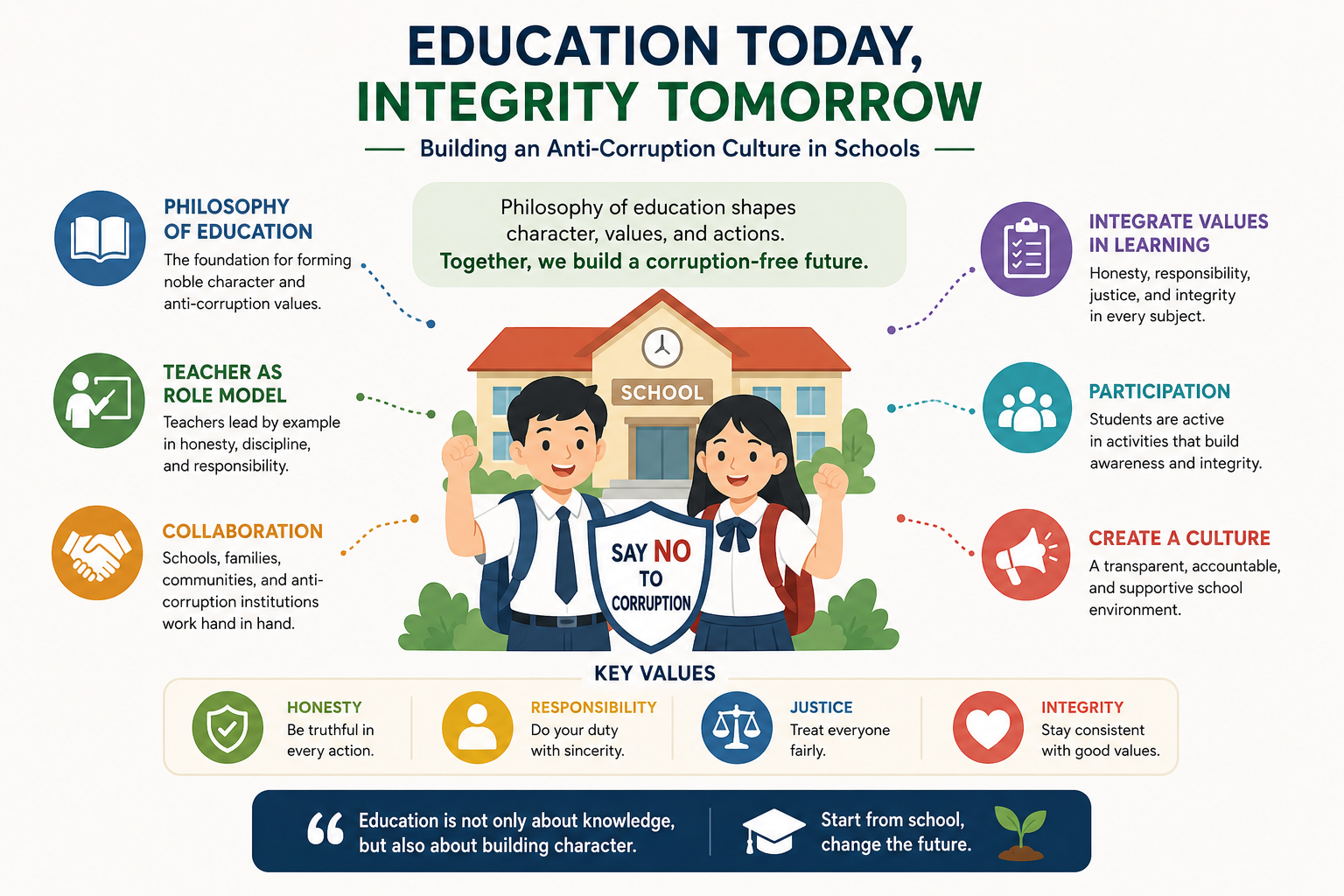
Corruption is a serious problem that is rooted in various sectors of life, including the world of education. This study aims to analyze how educational philosophy can be used as a foundation in forming an anti-corruption culture in schools. This study uses a qualitative approach with a literature study method to analyze philosophical concepts and their application in anti-corruption education. The findings of the study show that the philosophy of Islamic education contains values such as honesty, responsibility, justice, and integrity that are relevant in building the character of students. The thoughts of figures such as Plato, Ki Hajar Dewantara, and John Dewey also contributed to the understanding of the importance of character education in preventing corruption. The implementation of these values can be done through integration in the curriculum, teacher examples, transparent school policies, and cooperation with families and communities. By applying the philosophy of education as the basis for forming anti-corruption awareness and attitudes, schools can be at the forefront of producing a generation with integrity and commitment to building a society that is clean from corruption.
Downloads
References
Abdusima Nasution. (2022). Filsafat Pendidikan Islam (R. Salam (ed.); 2nd ed.). Nas Media Pustaka.
Andina, N. (2019). Implementasi Kebijakan Pendidikan Anti Korupsi di SMP Negeri 10 Yogyakarta. Jurnal Kebijakan Pendidikan, 8(2), 148.
Antari, M. M. (2022). Pendidikan Antikorupsi Sebagai Investasi Jangka Panjang Dalam Upaya Mewujudkan Tujuan Nasional. Jurnal Ilmu Hukum Sui Generis, 2(4), 134–144.
Aris. (2023). FIlsafat Pendidikan ISLAM (F. A. Pratama (ed.); 1st ed.). Yayasan Wiyata Bestari Samasta. https://doi.org/https://wbs-indonesia.com/
Bolo, A. D., Purwanti, P., Louk, V., Biliyandi, M. E., Ritan, F. P., & Pantur, B. (2022). Implementasi Pandangan Plato tentang Negara Ideal dalam Toleransi Umat Beragama di Indonesia. Focus, 3(2), 63–70. https://doi.org/10.26593/focus.v3i2.6091
Dules Ery Pratama Hrp, Y. N. (2024). Kajian Filosofis Tentang Keadilan Sosial Dari Pemikiran Plato. Mandub: Jurnal Politik, Sosial, Hukum Dan Humaniora, 2(3).
Fahmi, R. (2024). Pemikiran Ki Hajar Dewantara dan Relevansinya dalam Pendidikan Karakter Di Era Modern. Jurnal Review Pendidikan Dan Pengajaran, 7.
Hanafi, I., Yahman, Rahmawati, Razy, M. F., & Mahka. (2023). Buku Referensi Pendidikan Anti Korupsi: Evaluasi dan Pemantauan (R. Aqli (ed.); 1st ed.). PT. Literasi Nusantara Abadi Grup.
Handoyo, E. (2013). Pendidikan Anti Korupsi (N. T. Mukti (ed.); 1st ed.). Penerbit Ombak.
Hasbullah. (2020). Pemikiran Kritis John Dewey Tentang Pendidikan (Dalam Perspektif Kajian Filosofis). Tarbiyah Islamiyah: Jurnal Ilmiah Pendidikan Agama Islam, 10(1), 1–21.
Hermawan, H. (2009). Filsafat Pendidikan Islam. In A. Maulana (Ed.), Direktorat Jenderal Pendidikan Islam Departemen Agama Republik Indonesia (1st ed., Vol. 2, Issue 2).
Hidayat, R. &, & Syafriana, H. (2016). Filsafat Pendidikan Islam Membangun Konsep Dasar Pendidikan Islam. In Abdillah (Ed.), Lembaga Peduli Pengembangan Pendidikan Indonesia (LPPPI) (1st ed.).
Lestyowati, J. (2020). Metode Storytelling: Peningkatkan Motivasi Perilaku Antikorupsi. INTEGRITAS: Jurnal Antikorupsi, 6(1), 125–139. https://doi.org/10.32697/integritas.v6i1.
Mappasiara. (2017). Filsafat Pendidikan Islam. Inspiratif Pendidikan, VI, 1–4.
Mubarok, R. (2015). Pendidikan Humanis John Dewey Dalam Perspektif Pendidikan Islam. J-PAI: Jurnal Pendidikan Agama Islam, 2(1), 1–21. https://doi.org/10.18860/jpai.v2i1.3760
Muhammad Nuzli, Ahmad Fajar, H. K. R. (2022). Filsafat Pendidikan IslaM. In Hamdan (Ed.), Widina Bhakti Persada Bandung (1st ed.). Widina Bhakti Persada Bandung.
Muliadi, E., & Nasri, U. (2023). Future-Oriented Education: The Contribution of Educational Philosophy in Facing Global Challenges. Jurnal Ilmiah Profesi Pendidikan, 8(4), 2420–2427. https://doi.org/10.29303/jipp.v8i4.1807
Muthoifin, & Jinan, M. (2015). Pendidikan Karakter Ki Hadjar Dewantara: Studi Kritis Pemikiran Karakter dan Budi Pekerti Dalam Tinjauan Islam. Profetika: Jurnal Studi Islam, 16(2), 167–180.
Ningrum, N. A., & Wijaya, R. (2023). Penguatan Nilai-Nilai Anti Korupsi dalam Pembelajaran Pendidikan Pancasila dan Kewarganegaraan pada Siswa Kelas VII di SMP Negeri 1 Sidoarjo. Pedagogika: Jurnal Ilmu-Ilmu Kependidikan, 3(1), 127–133. https://doi.org/10.57251/ped.v3i1.1031
Noor, R. S. (2016). Pendidikan Karakter Anti Korupsi Sebagai Bagian Dari Upaya Pencegahan Dini Korupsi Di Indonesia. Jurnal Ilmu Hukum, 6, 1–23.
Nur Falah, M. Z., Rohmah, M., Surbhi, S., & Amiir, M. (2022). Pendidikan Progresif John Dewey: Relevansinya Dengan Pendidikan Islam Di Indonesia. EL-Hekam: Jurnal Studi Keislaman, 7(1), 28. https://doi.org/10.31958/jeh.v7i1.5782
Permana, S., & Setiawan, M. (2024). Korupsi sektor pendidikan di Indonesia: Realitas, penyebab, dan solusi. Integritas: Jurnal Antikorupsi, 10(2), 249–268.
Putra, N. R., & Linda, R. (2022). Korupsi di Indonesia: Tantangan perubahan sosial Nandha. Integritas : Jurnal Antikorupsi, 8(1), 13–24. https://doi.org/10.32697/integritas.v8i1.898
Putri, R. D. P., Martaningsih, S. T., Prabowo, M., & Rukiyati, R. (2023). Konsep merdeka belajar pada sekolah dasar ditinjau dari perspektif filsafat progresivisme. Jurnal Fundadikdas (Fundamental Pendidikan Dasar), 6(1), 01–12. https://doi.org/10.12928/fundadikdas.v6i1.7169
Rahayuningsih, F. (2022). Internalisasi Filosofi Pendidikan Ki Hajar Dewantara Dalam Mewujudkan Profil Pelajar Pancasila. SOCIAL : Jurnal Inovasi Pendidikan IPS, 1(3), 177–187. https://doi.org/10.51878/social.v1i3.925
Rahmadia, A. L. (2023). Relevansi Pemikiran Ki Hajar Dewantara dalam Penguatan Pendidikan Karakter. Prosiding National Conference for Ummah (NCU), 2(1), 371–376.
Rusman, A. (2020). Filsafat Pendidikan Islam Sebuah Pendekatan Filsafat Islam Klasik (Ammar (ed.); 1st ed.). CV. Pustaka Learning Center.
Sabilla, D. A., Ashar, H., & Nursikin, M. (2023). Filsafat Pendidikan Ki Hajar Dewantara Dan John Dewey Sebagai Landasan Pelaksanaan P5 Dalam Kurikulum Merdeka. Afeksi: Jurnal Penelitian Dan Evaluasi Pendidikan, 4(6), 632–643. https://doi.org/10.35672/afeksi.v4i6.176
Saihu, A. A. (2020). Implementasi Metode Pendidikan Pluralisme Dalam Mata Pelajaran Pendidikan Agama Islam. Belajea; Jurnal Pendidikan Islam, 5(1), 131. https://doi.org/10.29240/belajea.v5i1.1037
Salim, A. (2019). Kurikulum Dalam Perspektif Filsafat Pendidikan Islam. Jurnal EduTech, 5.
Salminawati. (2016). Filsafat Pendidikan Islam Membangun Konsep Pendidikan yang Islami. In S. Nasution (Ed.), Citapustaka Media Perintis (3rd ed., Vol. 6, Issue 2). Citapustaka Media Perintis.
Setiawan, A. (2021). Filsafat Pendidikan Politik Plato Sebagai Cara Untuk Menyiapkan Calon Pemimpin Indonesia. Qalamuna: Jurnal Pendidikan, Sosial, Dan Agama, 13(1), 93–106. https://doi.org/10.37680/qalamuna.v13i1.685
Shaliadi, I., & Dannur, M. (2023). Urgensi Pendidikan Anti Korupsi Di Sekolah. ANAYASA : Journal of Legal Studies, 1(1), 15–22. https://doi.org/10.61397/ays.v1i1.5
Sumaryati, Suyadi, & Hastuti, D. (2019). Pendidikan Antikorupsi Dalam Keluarga, Sekolah Dan Masyarakat (D. Yusmaliana (ed.); 1st ed.). UAD PRESS.
Teguh Setiawan Wibowo, Mohamad Suhaidi, Y. H. (2012). PENDIDIKAN ANTI KORUPSI (S. Mustoip (ed.); 1st ed., Issue March). CV. AINA MEDIA BASWARA.
Thoyyibah, I. (2018). Pendidikan Dasar Anti Korupsi Dalam Tinjauan Filsafat Pendidikan Islam. Menara Ilmu, XII(80), 50–66. https://jurnal.umsb.ac.id/index.php/menarailmu/article/download/643/576
Tolchah, M. (2015). Filsafat Pendidikan Islam: Konstruksi Tipologis dalam Pengembangan Kurikulum. Tsaqafah, 11(2), 381. https://doi.org/10.21111/tsaqafah.v11i2.274
Wahyu Trisno Aji, M. R. (2024). Program Projek Penguatan Profil Pelajar Pancasila ( P5 ) dalam Pandangan Filsafat Pendidikan John Dewey. Harmoni Pendidikan: Jurnal Ilmu Pendidikan, 1(4).
Widodo, S. (2019). Membangun Pendidikan Anti Korupsi di SD. JPD: Jurnal Pendidikan Dasar, July. https://doi.org/10.21009/JPD.010.04
Yanti, I. (2022). Penerapan Karakter Disiplin dalam Pembelajaran di Sekolah Menengah Pertama Negeri 4 Logas Tanah Darat. Pedagogi: Jurnal Pendidikan Dan Pembelajaran, 2(2), 18–25.
Yasmansyah, I. (2022). Pentingnya Filsafat Pendidikan Dalam Pembentukan Karakter. Jurnal Penelitian Ilmu Pendidikan Indonesia, 1(2), 49–58. https://doi.org/10.31004/jpion.v1i2.21
Downloads
Published
How to Cite
Issue
Section
License
Copyright (c) 2025 Muhammad Ilham Halwani, Raharjo

This work is licensed under a Creative Commons Attribution-NonCommercial-ShareAlike 4.0 International License.
This work is licensed under a Creative Commons Attribution-NonCommercial-ShareAlike 4.0 International License.
The copyright of the received article shall be assigned to the journal as the publisher of the journal. The intended copyright includes the right to publish the article in various forms (including reprints). The journal maintains the publishing rights to the published articles. Authors are allowed to use their articles for any legal purposes deemed necessary without written permission from the journal with an acknowledgment of initial publication to this journal.