Implementation of Pragmatic Stream Principles in Islamic Education Learning: Efforts to Realize Adaptive and Solutive Education
DOI:
https://doi.org/10.67046/sjse.v1i02.38Keywords:
Educational Pragmatism, Islamic Education, Adaptive Learning, Solution-Oriented Learning, Modern EraAbstract
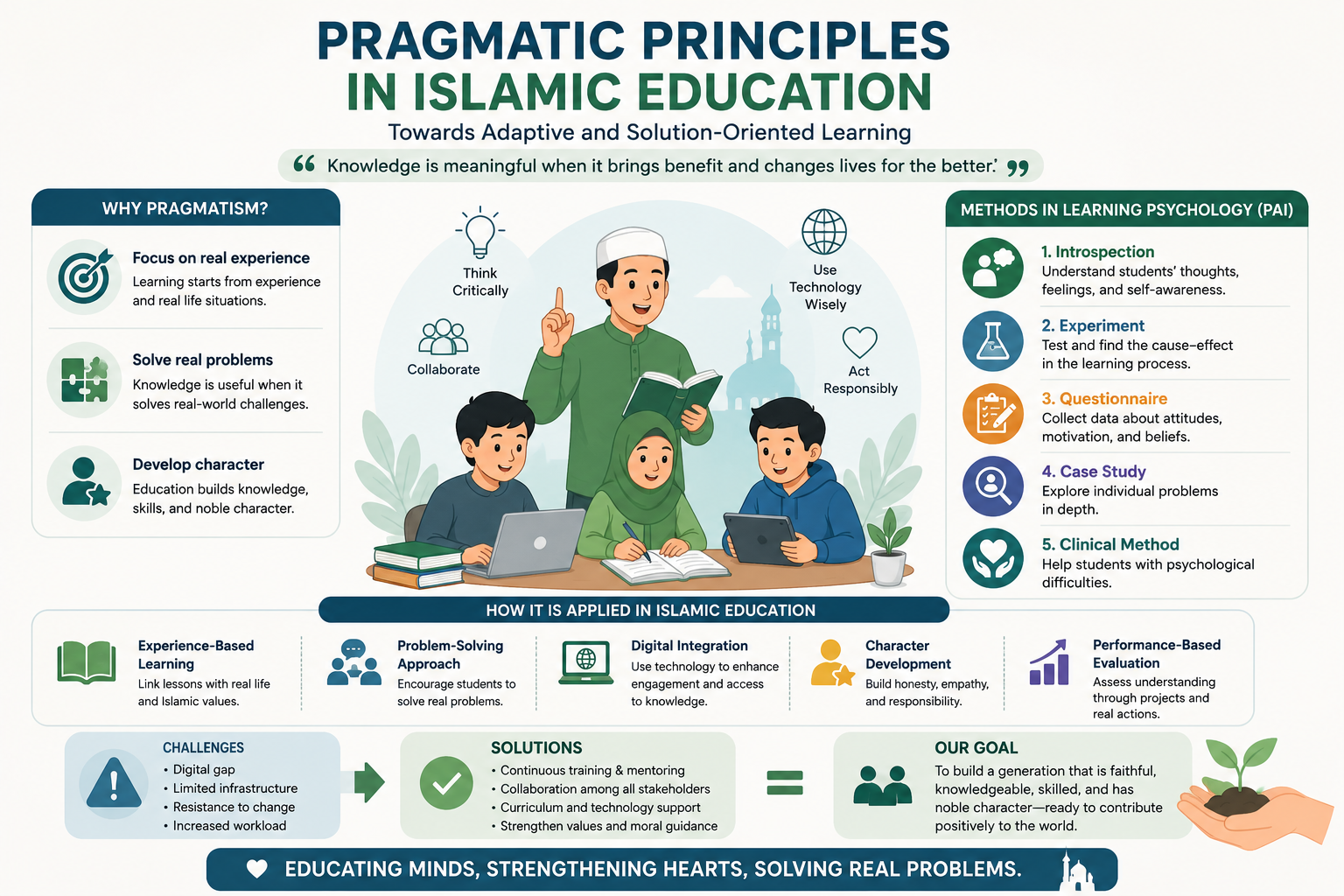
The development of the modern era marked by globalization, digitalization, and the complexity of social problems requires Islamic Education to be adaptive and solution-oriented. However, Islamic Education learning still tends to be normative and insufficiently connected to students’ real-life contexts, thus necessitating a relevant philosophical and pedagogical approach. This study aims to analyze the principles of the pragmatic school of thought and their implementation in Islamic Education learning to realize adaptive and solution-oriented education. This research employs a qualitative approach using a library research method. Data were obtained from books, scholarly journal articles, and relevant academic documents. Data collection was conducted through source selection, critical reading, and systematic note-taking. Data were analyzed using descriptive-analytical content analysis techniques. The findings indicate that pragmatic principles such as experiential learning, problem solving, inquiry-based learning, technological integration, and performance-based assessment are compatible with the values of Islamic Education. The implementation of these principles enhances learning relevance, strengthens character development, and makes Islamic Education more contextual in addressing modern challenges. The implementation of pragmatism in Islamic Education strengthens the integration of knowledge and action, making learning more applicable, adaptive, and responsive to contemporary social dynamics. The novelty of this study lies in the conceptual synthesis of educational pragmatism with Islamic values as a foundation for adaptive and solution-oriented learning.
Downloads
References
Ahdar. (2019). Tantangan pendidikan Islam di Indonesia pada era globalisasi. Jurnal Al-Islah, 2(2).
Arini, R., Ningrum, R. C., & Hidayat, S. (2024). Kurikulum Merdeka dalam perspektif filsafat pendidikan pragmatisme. Literasi: Jurnal Ilmu Pendidikan, 15(1), 14–26. http://dx.doi.org/10.21927/literasi.2024.15(1).14-26
A’yun, R. (2021). Strategi problem solving dalam penguatan pendidikan Islam kontekstual. Jurnal Pendidikan Islam Modern, 7(1), 44–56.
Aziz, S., Fahman, M., & Latif, M. A. (2021). Pendekatan pragmatis dalam pendidikan Islam: Kajian terhadap teori Al-Dzara’i’ dalam filsafat pendidikan Islam. AL-AUFA: Jurnal Pendidikan dan Kajian Keislaman, 3(1), 58–79.
Basri, M. (2022). Pemanfaatan teknologi digital dalam pendidikan Islam di era modern. Jurnal Teknologi Pendidikan Islam, 7(1), 30–45.
Creswell, J. W. (2014). Research design: Qualitative, quantitative, and mixed methods approaches (4th ed.). SAGE Publications.
Dewey, J. (1916). Democracy and education: An introduction to the philosophy of education. Macmillan.
Harfandi, A. (2024). Pragmatisme instrumental dalam sketsa pendidikan Islam di Indonesia. Jurnal Pendidikan Islam Kontemporer, 5(2), 101–115.
Hidayah, N. (2022). Pemikiran pragmatisme-konstruktivisme John Dewey sebagai solusi pembelajaran MTs. Jurnal Tarbiyatuna, 13(1), 44–57.
Hidayat, N. (2020). Pengaruh modernisasi terhadap nilai-nilai Islam dalam pendidikan. Jurnal Pendidikan Islam Kontemporer, 7(2), 105–123.
Huda, M. (2020). Pembelajaran aktif dalam perspektif pendidikan Islam. Jurnal Tarbiyah, 27(2), 112–125.
Ilyas, Y. (2021). Tujuan pendidikan Islam dalam pencapaian insan kamil. Jurnal Ilmu Pendidikan Islam, 10(1), 1–12.
Ismail, Y. (2023). Fleksibilitas kurikulum dalam pendidikan pragmatis. Jurnal Evaluasi Pembelajaran, 9(1), 24–39.
Isrul, M., Ismail, & Fajrah, N. F. (2024). Filsafat pendidikan pragmatis sebagai kompas guru di era digital: Implikasi bagi praktik pedagogis. Jurnal Basicedu, 8(6), 4827–4838. https://jbasic.org/index.php/basicedu
James, W. (1975). Pragmatism: A new name for some old ways of thinking. Harvard University Press.
Kosasih, A. (2022). Filsafat pendidikan pragmatisme: Telaah atas teori manajemen pendidikan John Dewey. Faktor: Jurnal Ilmiah Kependidikan, 9(1), 98–109.
Kristiawan, M. (2016). Filsafat Pendidikan; The choice is yours (L. Hendri & J. Juharmen, Eds.). Valia Pustaka.
Kurniawati, S., & Muchtar, S. (2021). Islamic education and modern competencies in the digital age. Islamic Education Studies, 12(2), 130–149.
Mardiah Astuti, et al. (2023). Pendidikan Islam dan pembentukan identitas Muslim di era globalisasi. SASANA: Jurnal Pendidikan Agama Islam, 3(1), 149–156.
Muhaimin. (2018). Filsafat pendidikan Islam. Rajawali Press.
Muryani, M., Anengsih, A., Hidayat, S., & Dewi, R. S. (2023). Filsafat pendidikan pragmatisme dan konstruktivisme. Syntax Literate: Jurnal Ilmiah Indonesia, 8(9), 5241–5252. https://doi.org/10.36418/syntax-literate.v8i9.10118
Nidawati, N. (2022). Keterkaitan dan implikasi pragmatisme dalam pendidikan. Jurnal Filsafat Pendidikan, 4(3), 200–213.
Nisrin, et al. (2022). Tantangan pendidikan Islam di era globalisasi dalam menjaga nilai-nilai keislaman. SASANA: Jurnal Pendidikan Agama Islam, 3(1).
Nurdin, S. (2019). Peran guru sebagai fasilitator dalam pendidikan Islam kontemporer. Didaktika Islamika, 9(2), 76–88.
Peirce, C. S. (1935). Collected papers of Charles Sanders Peirce. Harvard University Press.
Purnomo, I. (2024). Kepemimpinan Islami dalam mengantisipasi perubahan pendidikan ke era digital. Journal of Islamic Leadership and Education Management (JILEM), 2(1), 29–38.
Rahim, A., & Syamsuddin, S. (2019). Pendidikan Islam dan problematika modernitas: Upaya integrasi ilmu Islam dan sains. Jurnal Pendidikan Islam Modern, 6(1), 110–123.
Rahman, F., et al. (2020). The integration of religious and secular sciences in Islamic education. Journal of Educational Studies in Islamic Sciences, 10(2), 145–160.
Rahmawan, A. (2022). Religious pragmatism in Islamic education. Jurnal Cendekia Islamika, 7(2), 130–145.
Rifa’i, M. (2022). Analisis pemikiran Charles Sanders Peirce dalam implementasi pendidikan Islam. Jurnal Al-Fikr, 15(2), 98–113.
Rizal, F. M. (2025). The impact of educational philosophy on the development of Islamic education curriculum: Integrating pragmatism. JARSSH: Journal of Advanced Research in Social & Human Sciences, 10(1), 1–13.
Sakinah, S. (2023). Muslim understanding of pragmatism and its application in Malaysia: A critical study. International Journal of Islamic Education Studies, 10(1), 55–70.
Salman, A. (2012). Pendidikan Agama Islam dan tantangan modernisasi. Jurnal Pendidikan Agama Islam, 12(2), 134–147.
Saragih, H., Hutagalung, S., Mawati, A. T., Chamidah, D., Khalik, M. F., Sahri, S., Wula, P., Purba, B., Purba, S. R. F., & Kato, I. (2021). Filsafat pendidikan (Karim, Abdul, Ed.). Yayasan Kita Menulis.
Satiri, S., Hasani, A., Nulhakim, L., Ruhiat, Y., & Hadi, C. A. (2024). Filsafat pendidikan pragmatisme: Sebuah analisis tentang teori pragmatisme dalam pendidikan. Innovative: Journal of Social Science Research, 4(3), 5262–5272. https://doi.org/10.31004/innovative.v4i3.7805
Shodikun, I., & Sholehuddin, M. (2023). Pemikiran pragmatisme dalam filsafat pendidikan Islam perspektif kontemporer. Jurnal Pendidikan Islam, 9(1), 77–92.
Shodiq, M. (2022). Pragmatisme sebagai solusi pembelajaran pendidikan Islam. Jurnal Ilmu Tarbiyah, 6(3), 110–123.
Synytsia, A. (2020). Education as a means of affirming democracy values in John Dewey’s pragmatism: Modern perspective. Journal of Education Culture and Society, 11, 30–41. https://doi.org/10.15503/jecs2020.1.30.41
Tanzeh, A. (2019). Pendekatan konstruktivisme dalam pembelajaran PAI di sekolah. At-Tarbawi, 4(1), 67–81.
Wasitohadi. (2012). Pragmatisme, humanisme dan implikasinya bagi dunia pendidikan di Indonesia. Satya Widya, 28(2), 175–190. https://doi.org/10.24246/j.sw.2012.v28.i2.p175-190
Wikandaru, R., Cathrin, S., Husin, H., Listiana, I., Pantas, P. E., Widyoningsih, W., Bilqis, F., & Indah, A. V. (2021). The contribution of the pragmatism educational philosophy in the implementation of Pancasila education during distance learning. KNE Social Sciences. https://doi.org/10.18502/kss.v6i2.10015
Yusuf, M. Y., & Ristianah, N. (2023). Optimalisasi pembelajaran menggunakan artificial intelligence (AI) dalam mewujudkan pendidikan Islam yang adaptif. Al-Fatih: Jurnal Studi Islam, 11(2), 116–127.
Zulkipli. (2023). Implikasi pandangan filsafat pendidikan dalam bidang pragmatisme. Jurnal Manajemen Pendidikan Al Hadi, 3(1), 34–47. http://dx.doi.org/10.31602/jmpd.v3i1.10154
Ivey, K.C. (2 September 2012). Citing Internet sources URL http://www.eei- alex.com/eye/utw/96aug.html .
Downloads
Published
How to Cite
Issue
Section
License
Copyright (c) 2025 Dhnsnaa, Abdul Khobir, Nilna Zulfa, Ika Nur Iliza

This work is licensed under a Creative Commons Attribution-NonCommercial-ShareAlike 4.0 International License.
This work is licensed under a Creative Commons Attribution-NonCommercial-ShareAlike 4.0 International License.
The copyright of the received article shall be assigned to the journal as the publisher of the journal. The intended copyright includes the right to publish the article in various forms (including reprints). The journal maintains the publishing rights to the published articles. Authors are allowed to use their articles for any legal purposes deemed necessary without written permission from the journal with an acknowledgment of initial publication to this journal.